
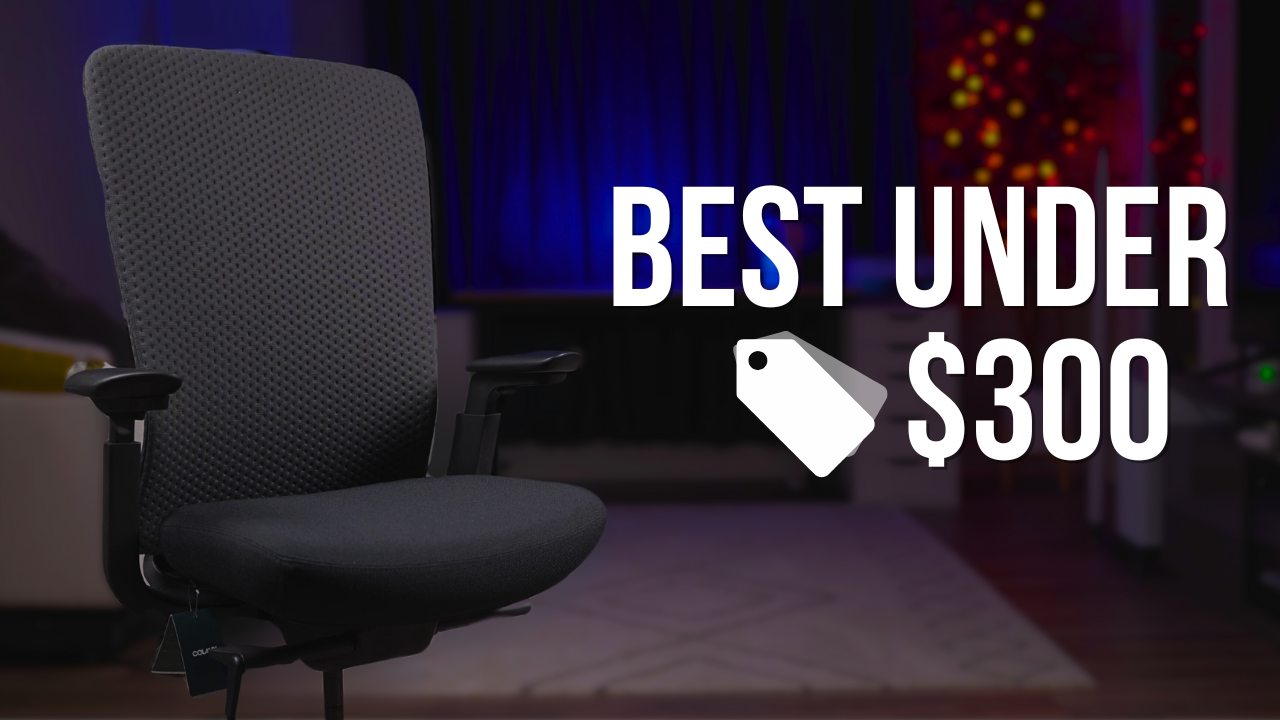
COLAMY’s latest budget offering takes a completely different approach to comfort – but does it maintain the brand’s impressive track record?

COLAMY has been absolutely dominating the sub-$300 office chair market with standout models like the Atlas and 5188, both of which rank among the best budget office chairs available. When a brand establishes this kind of reputation, their next release carries high expectations.
The COLAMY Neza represents their latest entry in this competitive price range at around $280. While positioned similarly to their other offerings price-wise, the Neza takes a completely different approach to comfort and design that diverges from COLAMY’s mesh-focused chairs. Instead of following the mesh trend that dominates budget ergonomic chairs, the Neza features fully upholstered construction with premium comfort features typically reserved for chairs costing over $1,000.
After several weeks of intensive testing, here’s my comprehensive analysis of whether COLAMY has succeeded in creating another winner or if they’ve strayed too far from their proven formula.
COLAMY Neza Review Video
Design Overview: Standing Out in the Budget Category
The COLAMY Neza immediately distinguishes itself from typical budget office chairs with a design approach that’s rare in this price segment.
Fully Upholstered Differentiation
While most ergonomic chairs under $300 default to mesh designs (cheaper to manufacture, easier to market as breathable), the Neza embraces full upholstery that creates a distinctly premium appearance.
The standout feature: Textured upholstery on the backrest that’s remarkably reminiscent of the Digital Knit material found on the Haworth Fern – a chair that costs nearly 5 times as much at ~$1,400. COLAMY is clearly attempting to democratize premium design elements for budget-conscious buyers.
Color Options and Aesthetic Choices
The Neza comes in two colorways: Gray and Navy Blue, both using a two-toned design approach:
- Colored backrest (gray or navy blue)
- Black seat for both options
Design preference note: While the two-tone approach looks good, I personally would prefer the option for uniform color throughout the entire chair, similar to COLAMY’s other models. This would provide a cleaner, more cohesive appearance.
Overall Aesthetic Impact
The Neza achieves a modern, professional look that transcends typical budget chair limitations:
- Versatile enough for gaming setups or corporate office environments
- Doesn’t look budget – immediately stands out from generic sub-$300 chairs
- Contemporary styling that won’t look dated quickly
The design successfully avoids the “cheap office chair” stigma that plagues most budget options.
Build Quality and Materials: Different Approach, Solid Execution
The Neza’s construction represents a slight step down from the COLAMY Atlas in terms of premium materials, but this trade-off enables its unique comfort features.
Base and Frame Construction
Single-piece nylon base rather than the metal/nylon combination found on the Atlas.
Assessment: While technically a downgrade on paper, the nylon feels very dense and sturdy without raising durability concerns. It’s a sensible material choice that allows budget allocation toward other features.
Frame composition: Primarily plastic with minimal metal components beyond the mechanism.
Important context: This isn’t inherently negative – even high-end chairs from Herman Miller and Steelcase use predominantly plastic construction. The key is plastic quality, and the Neza uses very dense, high-quality plastic that enables both durability and flexibility.
The Flexible Frame Innovation
One of the Neza’s most impressive features is its thin, flexible plastic frame wrapped in soft knitted fabric upholstery.
Why this matters: Flexible frame designs typically only appear in higher-end chairs from brands like Haworth and Steelcase (think Haworth Fern, Steelcase Gesture). Seeing this implementation at the $280 price point is genuinely impressive.
Functional benefits:
- Dynamic support that moves with you
- Reduced pressure points through frame flexibility
- More comfortable stretching and shifting positions
- Premium feel that distinguishes from rigid budget chairs
Upholstery Quality
The fabric upholstery feels substantially higher quality than typical budget chair materials:
- Soft to the touch with pleasant tactile experience
- Good cushioning throughout contact points
- Premium feel that enhances overall perception
- Comfortable temperature – not the cold plastic feel of many budget chairs
Build quality verdict: While not quite matching the Atlas’s tank-like construction, the Neza compensates with flexible frame design and premium upholstery. It’s still better built than most chairs in the $300 price range – just taking a different philosophical approach to design and comfort.
Comfort Analysis: Softer, More Traditional Experience
The Neza’s comfort profile represents a significant departure from COLAMY’s mesh-focused chairs, targeting users who prefer traditional upholstered seating.
Seat Comfort: Plusher Alternative
The Neza seat uses thicker, softer cushioning compared to the Atlas, creating a distinctly different sitting experience.
Comfort characteristics:
- Sink-in feeling without bottoming out during extended sessions
- Good support maintenance throughout long sitting periods
- Flatter design that feels more spacious than the Atlas’s tapered edges
- Even weight distribution across entire seat surface
Personal preference: I find the flat shape more comfortable overall as it distributes pressure more evenly rather than concentrating it in the center.
Wave Spring System: Marketing vs. Reality
COLAMY includes their “Wave Spring System” underneath the seat pad, supposedly providing uniform support and reducing pressure points.
Honest assessment: It’s really not that noticeable in practice. You feel slight bounce when initially sitting, but beyond that, it’s rarely apparent during normal use.
My take: Feels somewhat gimmicky, though it doesn’t detract from the chair. It’s there, it doesn’t hurt anything, but don’t expect it to revolutionize your sitting experience.
Backrest Performance: Flexible Frame Benefits
The backrest is where the Neza’s flexible frame design really shines, creating a comfortable, dynamic support system.
Flexibility advantages:
- Moves with you during position changes
- Gentle give provides comfort without feeling flimsy
- Reduces pressure points compared to rigid frames
- Accommodates stretching and movement naturally
Upper back support: The backrest provides adequate support for most users, though lacking the pronounced lumbar support found on some ergonomic chairs.
Material feel: The soft, textured upholstery feels excellent against your back and clothing, providing a cushioned, premium sensation distinct from mesh designs.
Recline Functionality: Smooth with Standout Tension Adjustment
The Neza delivers excellent recline performance with one feature that particularly impressed me.
Recline specifications:
- Deep 127-degree recline great for lounging and breaks
- Multiple lock positions for maintaining reclined angles
- Smooth operation throughout the recline range
Missing feature: Unfortunately, there’s no headrest option for this chair, which is disappointing since headrests significantly enhance extended reclining comfort.
Tilt Tension Adjustment: The Standout Feature
The Neza uses a crank-like mechanism similar to what you’ll find on Haworth chairs, and this is a massive improvement over typical budget chair implementations.
Why this is exceptional:
- Very responsive to adjustments
- Easy to adjust while sitting – no awkward reaching required
- Precise control over tension settings
Comparison to competition: Most budget chairs hide tilt tension knobs underneath the seat where they’re impossible to reach without standing up – incredibly frustrating for users who adjust tension frequently throughout the day.
Personal impact: As someone who adjusts tilt tension regularly depending on task and position, this is a much-welcomed feature that elevates the user experience significantly.
Armrest Performance: Premium Features with Minor Limitations
The Neza’s armrests deliver strong overall performance with one standout feature rarely seen at this price point.
Adjustment Capabilities
Full 4D adjustability:
- Height adjustment for desk matching
- Width adjustment for body size accommodation
- Depth adjustment for positioning
- Pivot adjustment for angle customization
Range of motion: Pretty decent across all adjustment dimensions, providing good customization potential.
Adjustment Mechanism Quality
No locking mechanisms, but adjustments have good resistance preventing accidental position changes.
Improvement over Atlas: Unlike the Atlas where arm pad adjustments were too loose, the Neza’s resistance level prevents unintentional bumping out of position.
Construction and Stability
All-plastic construction rather than the Atlas’s metal components.
Performance: Despite being plastic, they’re very sturdy with minimal play. You can easily push off them for position shifts or standing without wobbling.
Arm Pad Comfort
Cushioning: Some give but still on the firmer side.
Comparative assessment: More comfortable than the Atlas’s stiff pads, though I wish they were slightly softer for extended elbow contact.
Shape limitation: Not a fan of the rounded edges that make arms more prone to slipping off.
The Game-Changing Feature: Backrest-Connected Arms
The Neza’s armrests are connected to the backrest rather than the seat, meaning they recline with you.
Why this is exceptional:
- Typically only found in high-end chairs from Haworth and Herman Miller
- Enables reclining and rocking while maintaining arm support
- Eliminates the awkward gap created when seat-mounted arms stay forward during recline
- Makes armrests actually usable in reclined positions
This single feature dramatically enhances the reclining experience and represents genuine innovation at this price point.
Limitations to Note
Minimum height limitation: Armrests don’t go quite low enough to push the chair completely under your desk for space-saving.
Partial compensation: The depth adjustment allows getting close to your desk without bumping into the armrests, mitigating this somewhat.
Value Analysis: Excellent Features with Warranty Concerns
At approximately $250-280 on Amazon, the Neza delivers impressive value by bringing premium features to an accessible price point.
What You’re Getting for the Money
Premium features at budget pricing:
- Flexible frame design (typically $1,000+ chairs)
- Backrest-connected armrests (typically high-end chairs only)
- Full upholstered construction with quality materials
- Haworth-inspired crank tilt tension adjustment
- Full 4D armrest adjustability
- Soft, comfortable cushioning throughout
Build quality: Better than most chairs in the $300 price range, though approaching comfort and design differently than typical mesh options.
The Warranty Puzzle
One concerning aspect is the surprisingly short 1-year warranty, compared to the 3-year warranty on the Atlas and 5188.
Why this is odd: All these chairs are from the same brand, in the same price tier, yet the newer model has a shorter warranty period. This inconsistency is difficult to explain and raises questions about COLAMY’s warranty strategy.
Practical consideration: The build quality suggests the chair should last well beyond one year, but the shorter warranty period is worth noting for risk-averse buyers.
Comparative Value: Neza vs. Atlas
Atlas advantages:
- Slightly better build quality
- Longer 3-year warranty
- Includes headrest
- More “tank-like” construction
Neza advantages:
- Softer, more traditional sitting experience
- Flexible frame for dynamic support
- Cushioned upholstery comfort
- Backrest-connected armrests
- Better tilt tension adjustment accessibility
The verdict: Both chairs are high quality with premium features – they just represent different philosophies of comfort. Neither is objectively better; the choice depends on personal sitting preferences.
Read our full roundup review on the Best COLAMY Office Chairs
Bottom Line: Another Winner from COLAMY
COLAMY has successfully added another excellent chair to their lineup, maintaining their dominance of the sub-$300 price tier while exploring new comfort approaches.
You Should Buy the COLAMY Neza If:
- You prefer softer, upholstered seating over mesh designs
- You value flexible frame technology for dynamic support
- You frequently recline and want armrests that work in reclined positions
- You adjust tilt tension regularly and want easy access
- You want premium features (flexible frame, connected armrests) at budget pricing
- You prefer traditional cushioned chairs over breathable mesh
You Should Consider the Atlas Instead If:
- You prioritize maximum build quality and durability
- You want the longer 3-year warranty
- You need a headrest for reclining comfort
- You prefer mesh breathability over upholstered comfort
- You want the most “premium-feeling” construction
You Should Look Elsewhere If:
- You need a headrest (the Neza doesn’t offer one)
- Warranty length is a primary concern (only 1 year)
- You specifically want all-mesh construction
- You need armrests that go low enough for full desk clearance
- You prefer softer, more cushioned arm pads
Alternative Recommendations
For mesh alternative from COLAMY: Consider the Atlas for tank-like build and headrest, or 5188 for all-mesh design.
For similar price with headrest: Look at the Branch Ergonomic Chair around $300.
For maximum budget value: The COLAMY Atlas at $280 offers slightly better overall value with longer warranty.
Final Verdict: The COLAMY Neza represents successful innovation in the budget chair market, bringing genuinely premium features (flexible frame, backrest-connected armrests) to an accessible price point. While the short warranty period is disappointing, the chair itself delivers excellent comfort and build quality that should satisfy users seeking a softer, more traditional sitting experience with high-end features.
COLAMY continues to demonstrate that budget pricing doesn’t require compromising on innovation or comfort – you just need smart design decisions and careful feature prioritization. The Neza proves there’s room for different approaches to comfort in the budget segment, and users who prefer upholstered cushioning over mesh will find this an exceptional value.
If you know you want a softer, more traditional office chair experience with features typically reserved for $1,000+ chairs, the Neza delivers that experience at a fraction of the cost.
This review is based on several weeks of daily use in a professional home office environment. The chair was provided by COLAMY for review purposes, with all opinions remaining independent and uncompensated.