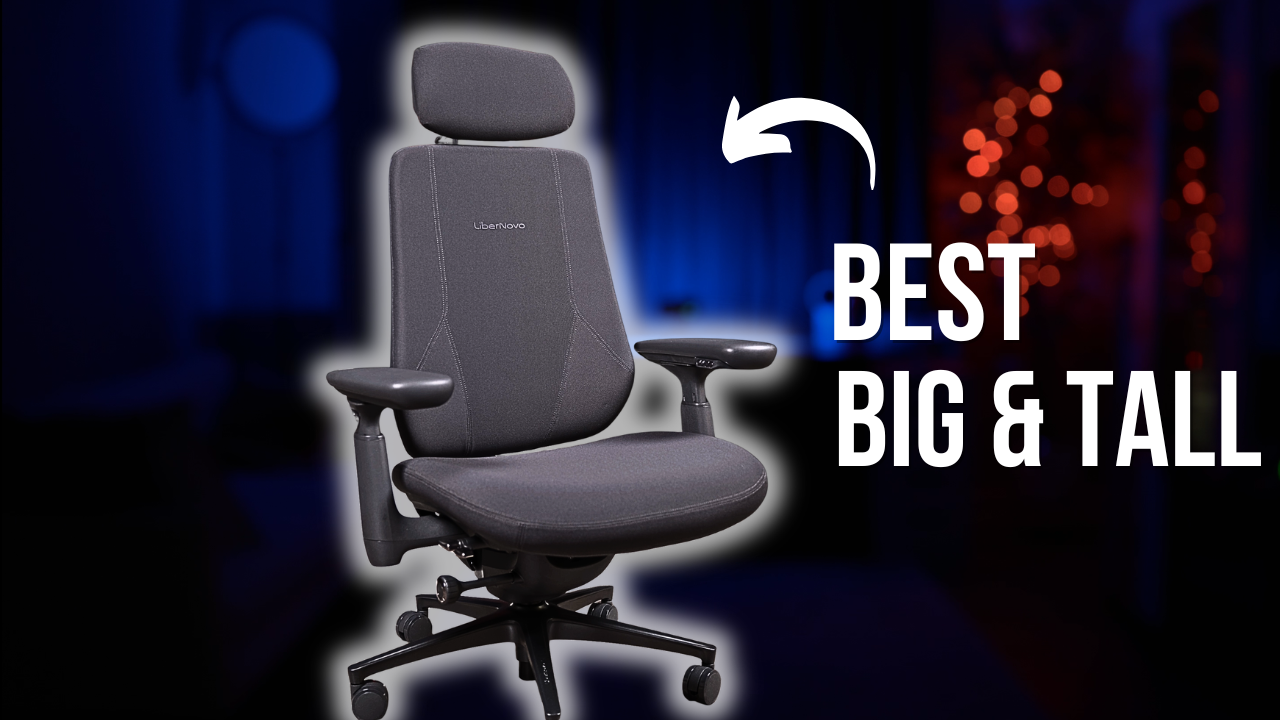
Hands-on with a pre-production unit | A big and tall chair that was actually designed for bigger users

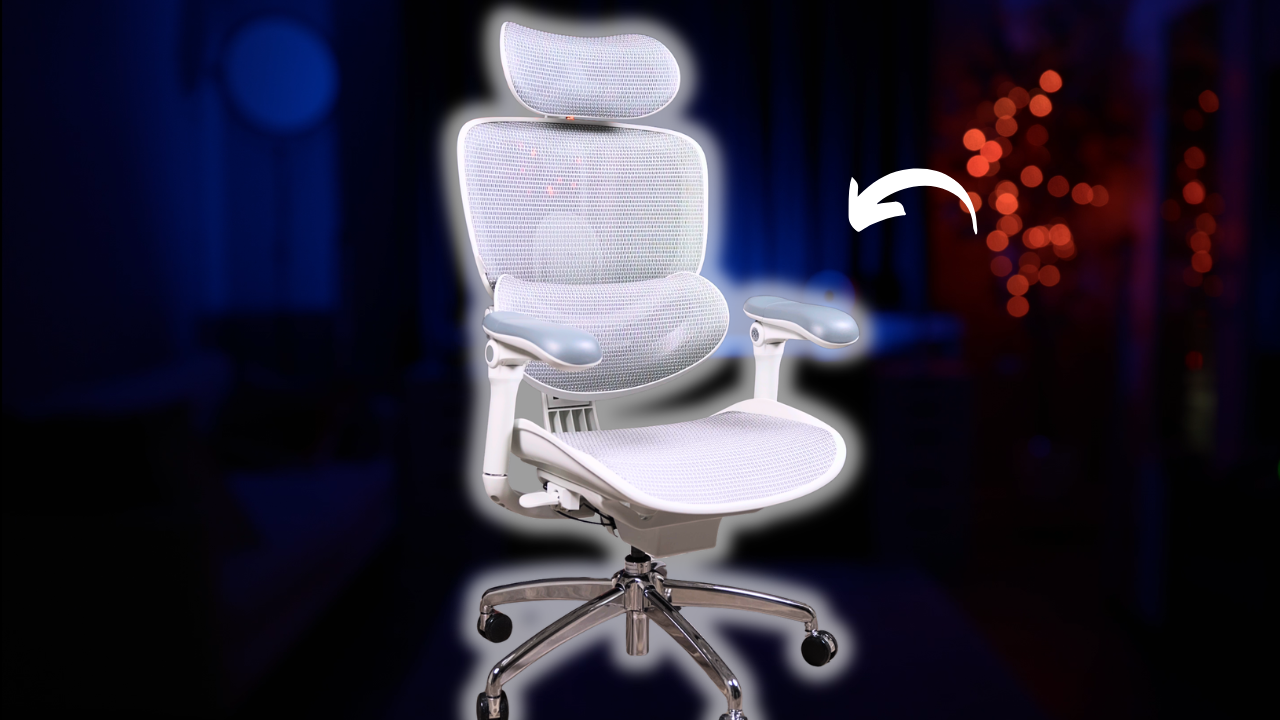
LiberNovo Maxis
- Purpose-built for larger users from roughly 5’10” to 6’7″ and up to 399 pounds
- Exceptionally comfortable 52 cm deep seat with a reinforced front edge and zoned foam
- Wider flexible backrest gives larger users substantially more room and support
- Controlled six-spring recline system goes all the way back to 160°
Exceptional Seat
The 52 cm deep seat uses multi-layer zoned foam with softer cushioning toward the front and firmer support toward the rear. A reinforced front edge also improves support compared with the original Omni.
Wider Flexible Backrest
The Bionic FlexFit backrest maintains the flexibility of the Omni while providing substantially more room for larger users through a wider, flared design.
Outstanding Recline
A six-spring controlled recline system supports your weight throughout the motion and offers five positions ranging from 105° all the way to 160°.
Redesigned 4D Armrests
Larger, softer arm pads provide excellent comfort while the outward-curving design creates more room around the waist. Height, depth, width, and pivot adjustments provide a large positioning range.
How We Tested
We tested the Maxis as a purpose-built big-and-tall ergonomic chair, focusing on whether its larger dimensions and redesigned components actually improve comfort and support compared with simply scaling up a conventional office chair.
- Evaluated the 52 cm seat for thigh support, cushioning, pressure distribution, and front-edge support
- Tested the wider Bionic FlexFit backrest for flexibility, lower-back support, and room around the hips
- Used the six-spring recline system across its 105°, 115°, 125°, 135°, and 160° positions
- Evaluated the redesigned 4D armrests for comfort, positioning range, and additional waist clearance
- Tested the integrated memory foam headrest throughout the chair’s recline range
- Compared the Manual lumbar adjustment with LiberNovo’s motorized lumbar system
Pros
- Purpose-built for bigger and taller users
- Exceptional multi-layer foam seat
- Deep 52 cm seat provides excellent thigh support
- Reinforced front seat edge improves support
- Wide, flexible backrest provides excellent coverage
- Outstanding 160° maximum recline
- Six-spring recline feels controlled and stable
- Excellent 4D armrest adjustment range
- Large and comfortable arm pads
- Excellent integrated headrest
- One-piece aluminum alloy base
- Excellent overall build quality
Cons
- Not well suited to smaller users
- Electric lumbar can push too high into the mid-back
- Motorized lumbar is more useful for stretching than traditional lumbar support
- Tilt limiter doesn’t fully lock you into a reclined angle
- More expensive than typical big-and-tall chairs
- Five-year warranty is shorter than some established premium competitors
- Electronic components only receive two years of coverage
- LiberNovo doesn’t yet have the long-term track record of established premium office-chair brands
| Chair Type | Premium big-and-tall ergonomic office chair |
|---|---|
| Recommended User Height | Approximately 5’10” to 6’7″ |
| Weight Capacity | Up to 399 lbs |
| Seat | Multi-layer zoned foam with reinforced front edge |
| Seat Depth | 52 cm |
| Backrest | Wide Bionic FlexFit flexible backrest |
| Armrests | 4D — height, depth, width, and pivot |
| Headrest | U-shaped memory foam headrest with recline tracking |
| Recline | 105°, 115°, 125°, 135°, and 160° |
| Maximum Recline | 160° |
| Recline System | Six-spring controlled recline system |
| Base | One-piece aluminum alloy |
| Versions | Manual, Electric, and Airflow |
| Manual Lumbar | Precision screw-driven adjustment |
| Electric / Airflow Lumbar | Motorized S-curve lumbar adjustment |
| Airflow Version | Active seat ventilation with two fan speeds and Danish Gabriel fabric |
| Chair Warranty | 5 years |
| Electronics Warranty | 2 years |
The Bottom Line
The LiberNovo Maxis is one of the most compelling big-and-tall ergonomic chairs I’ve tested. Rather than simply making the Omni larger, LiberNovo redesigned the chair’s major contact points around bigger and taller users.
The deeper 52 cm seat provides substantially more thigh support, the wider backrest gives larger users more room, the redesigned armrests are excellent, and the six-spring recline system feels controlled and stable even as you lean back toward 160°.
My biggest concern is the motorized lumbar system on the Electric and Airflow versions. At stronger settings it can push too high into the mid-back, and I prefer the simpler manual adjustment. LiberNovo’s shorter warranty and limited long-term track record are also worth considering.
If you’re roughly 5’10” to 6’7″ and up to 399 pounds, the Maxis is one of the strongest purpose-built big-and-tall ergonomic chairs I’ve tested.
Finding a great ergonomic chair as a bigger or taller person is genuinely difficult. Most chairs marketed as “big and tall” on places like Amazon are cheaply made and not actually built for larger frames. At the other end of the spectrum, purpose-built specialty big and tall chairs can run well into the thousands of dollars. There isn’t much in between.
That gap is exactly why the LiberNovo Maxis caught my attention.
Last year, the LiberNovo Omni was my favorite office chair I tested. Not my favorite under a certain price point, my favorite chair, period. So when LiberNovo told me they were taking that same foundation and redesigning it specifically for bigger and taller users, I was extremely curious whether they could pull it off. After spending time with the chair, I think they have.
The Maxis isn’t just an oversized Omni. LiberNovo reworked some of the most important parts of the chair, including the seat, backrest, armrests, and recline system, to better accommodate larger body types. These aren’t cosmetic changes or marketing bullet points. They’re meaningful design decisions that directly address the issues bigger users run into with traditional ergonomic chairs. And it all comes in at a price dramatically lower than most purpose-built big and tall ergonomic chairs.
Full disclosure: This review is sponsored by LiberNovo. However, they didn’t tell me what to say, they haven’t reviewed this article before publication, and all opinions are completely my own. One additional note: the chair reviewed here is a pre-production unit, so there may be small differences between what I describe and the final retail version.
LiberNovo Maxis Review Video
Design Overview and Build Quality
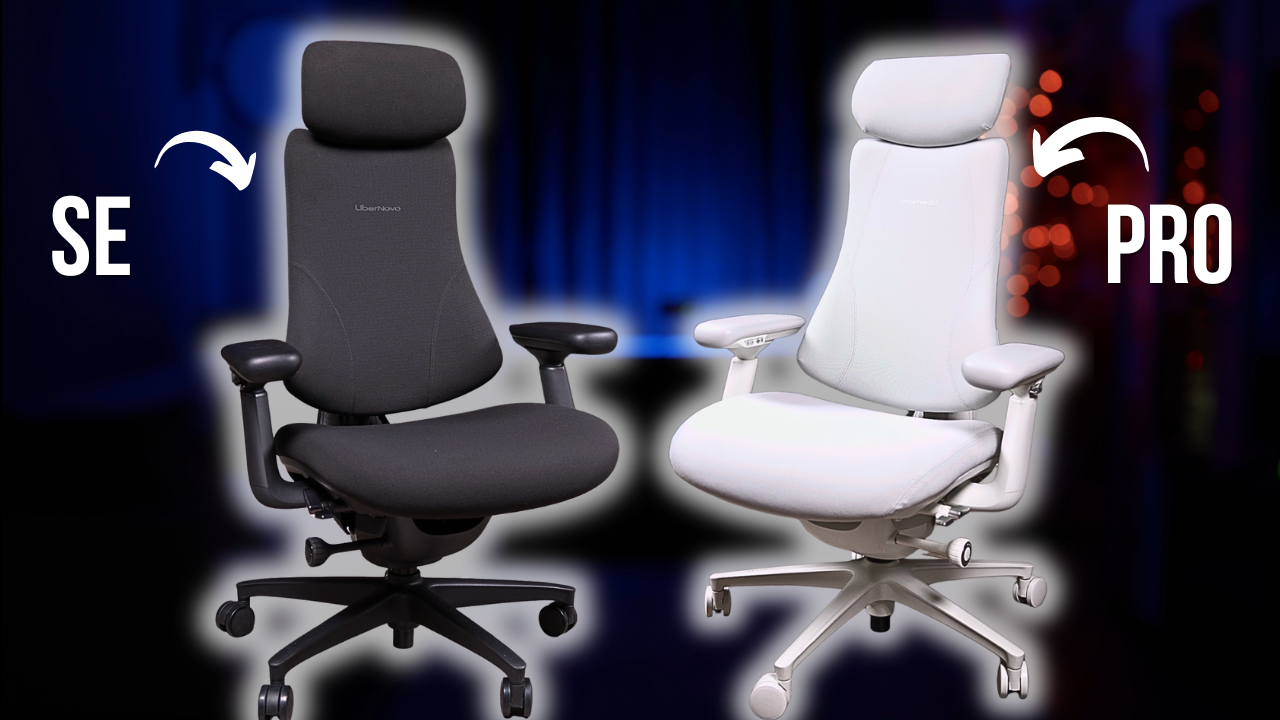
Like the new Omni lineup, the Maxis comes in three versions. The Manual offers manual screw-driven lumbar adjustment, the Electric adds motorized lumbar, and the Airflow adds active seat ventilation along with an upgrade to Danish Gabriel fabric. I covered these differences in depth in my Omni Pro and SE breakdown, so check that out if you want a closer look at how the versions compare.
Honestly, though, the model differences aren’t the most interesting part of this chair. What really sets the Maxis apart are its big and tall-specific design decisions, and this is where it separates itself not just from the Omni, but from almost every other “big and tall” chair on the market.
The reality is that most big and tall chairs aren’t actually designed for bigger users. They’re simply larger versions of an existing chair. Even premium brands do this. The Herman Miller Aeron, for example, comes in Size A, Size B, and Size C, but fundamentally it’s the same chair scaled to different dimensions.
LiberNovo took a different approach. Rather than just making the Omni bigger, they designed the Maxis specifically for users between 5’10” and 6’7″ and up to 399 pounds. While it absolutely feels like an Omni at its core, there are numerous subtle changes throughout that make it far better suited for larger body types.
The backrest is noticeably wider with a flared lower section that helps reduce pressure around the hips and lower back. The armrests are both longer and wider, with an outward-curving design intended to keep them from pressing into your waist. It’s a small detail, but one that immediately signals this chair was built around real-world feedback from larger users. The seat depth has also been increased to 52cm, compared to the 45cm and 48cm options on the Omni. For taller users, that extra depth provides significantly more thigh support and should make a real difference during long sitting sessions. LiberNovo also gave every Maxis model a one-piece aluminum alloy base to better support the increased weight capacity and overall size.
That’s really the theme throughout this review. The Maxis doesn’t feel like a bigger Omni. It feels like LiberNovo looked at every major contact point on the chair and asked how it would need to change for a larger user. The result is a chair that feels purpose-built rather than oversized.
Build quality is excellent across the board. Everything feels solid, substantial, and appropriately overbuilt for a chair designed to support larger users day after day. At this weight capacity, that isn’t just a nice bonus. It’s essential.
Comfort Breakdown
One of the Best Big & Tall Office Chairs I’ve Tested
LiberNovo
LiberNovo Maxis
- Purpose-built for larger users from roughly 5’10” to 6’7″ and up to 399 pounds
- Exceptionally comfortable 52 cm deep seat with a reinforced front edge and zoned foam
- Controlled six-spring recline system goes all the way back to 160°
Current Deal
Available in Manual, Electric, and Airflow versions. Check current pricing and availability.
Seat Comfort
For full transparency, at 5’6″ I’m not the target audience for this chair. To get a more accurate read, I had a larger friend test both the Omni and the Maxis side by side, and the difference was immediately noticeable.
With that said, the seat on the Maxis is one of the best I’ve ever used. LiberNovo carried over the same multi-layer zoned foam design from the Omni, with softer foam at the front edge for pressure relief and firmer foam toward the rear for support. The result is an exceptionally comfortable seat that ranks among the best I’ve tested on any office chair.
One of the biggest improvements is seat depth. At 52cm, you’re getting a noticeably deeper seat than the Omni, which maxed out at 48cm. For taller users with longer legs, that’s a meaningful upgrade. The additional depth provides more support under your thighs, helping distribute weight more evenly and reducing the unsupported feeling you can get when a seat is too short.
The Maxis also fixes one of my biggest criticisms of the original Omni: the front seat edge. On the Omni, the front of the cushion was a little too soft and could compress under your legs, creating a subtle sensation of sliding forward. The Maxis features a reinforced front edge that completely solves this. The front of the seat feels much more supportive, and you get a stronger sense of being properly planted in the chair.
If you go with the Airflow version, you also get LiberNovo’s Active AirFlow Seat Ventilation system. This integrates a centrifugal fan directly into the seat cushion to pull heat and moisture away from your body. There are two fan speeds, and you can genuinely feel the difference. The seat stays noticeably cooler, and the system pairs particularly well with the breathable Danish Gabriel fabric. A built-in occupancy sensor automatically pauses the fan when you get up and restarts it when you sit back down, which is a nice quality-of-life touch. Since bigger and taller users tend to run warmer, the Airflow version is well worth considering if temperature management matters to you.
Backrest and Lumbar Support
Like the Omni, the Bionic FlexFit backrest remains one of the most flexible designs I’ve tested. It moves naturally with your body and feels less restrictive than chairs like the Herman Miller Embody or Steelcase Leap.
What’s different here is the overall shape and size. The Maxis addresses the Omni’s narrower profile with a much wider, broader backrest that provides significantly more coverage throughout the upper body. For bigger and taller users, this is a major improvement and one of the biggest advantages the Maxis holds over the original Omni.
Lumbar support depends on which version you choose. On the Electric and Airflow models, you get LiberNovo’s motorized S-curve lumbar system, controlled through buttons on the armrest. As a traditional lumbar support system, I don’t think it’s the strongest implementation. The mechanism extends upward at an angle, and once it moves beyond a certain point, it starts applying pressure higher into your mid-back rather than directly into your lumbar region. I’d love to see some form of angle adjustment added in a future version.
Where this feature really shines is when you’re reclined. Leaning all the way back creates an incredibly satisfying back stretch. So while it isn’t an ideal lumbar support system, it’s an excellent stretching feature that provides real relief after extended sitting sessions.
The Maxis Manual takes a different route with a precision screw-driven adjustment knob on the side of the chair. No electronics, no batteries, no motors. You set it where you want it and leave it there. This is actually the version I prefer. Fewer moving parts means fewer potential failure points, and the manual adjustment gives you a consistent support position without any added complexity.
Recline
The recline on the Maxis is flat-out one of the best I’ve used on any chair. You get five recline positions: 105, 115, 125, 135, and 160 degrees, and the progression feels natural. 105 degrees is great for focused work, 135 degrees is the sweet spot for relaxed browsing or video calls, and 160 degrees is essentially gaming-chair territory. You can genuinely take a nap in this thing.
One thing to note is that the Maxis uses a tilt limiter rather than a tilt lock. It limits how far you can recline but doesn’t lock you into a specific angle, so you’ll always be able to come back up from a reclined position.
A new addition to the Maxis is the 6-Spring Controlled Recline System. The goal is to eliminate the sudden “drop” feeling you sometimes get when a traditional recline mechanism gives way under your weight. For bigger and taller users especially, that sensation can make a chair feel unstable, almost like you’re going to tip over. Instead, the six-spring system provides resistance throughout the entire recline motion. As you lean back, you can feel the springs supporting your weight and slowing the movement as you approach the end of the range. Rather than hitting a hard stop, you’re met with a soft, cushioned bounce that makes the chair feel noticeably more refined and premium.
What really makes the recline stand out, though, is how seamlessly the entire chair works together. As you lean back, the headrest automatically retracts into the proper position, the armrests slide rearward to stay aligned with your arms, and the backrest continuously adjusts to maintain support throughout the motion. Whether you’re sitting upright at your desk, kicking back to watch a video, or fully reclined for a quick break, the chair adapts with you every step of the way.
Armrests
The armrests have been significantly improved compared to the Omni. You get much larger arm pads with an arc design that keeps them from digging into your waist, a small but thoughtful improvement for bigger users who typically carry a wider midsection.
In terms of adjustability, you get full 4D armrests with height, depth, width, and pivot adjustments, and the range across all four directions is excellent. The adjustment ranges have been notably expanded from the Omni, and you can get them into basically any position you can think of. The arm pads themselves are also noticeably softer than those on the Omni. In fact, these are some of the most comfortable arm pads I’ve used on any chair. And just like on the Omni, the armrests move with you when you recline, sliding rearward to maintain proper arm support regardless of your seating position.
Overall, these are some of the best armrests I’ve used on any chair and a huge improvement over the original Omni.
Headrest
The Omni already had my favorite headrest on any office chair, and LiberNovo kept everything that made it great. You still get soft memory foam padding, excellent adjustability, and the automatic retracting mechanism that moves with you as you recline. The biggest change is a larger U-shaped design with more travel to accommodate taller users. It’s one of the few headrests I’ve used that feels genuinely integrated into the chair rather than added as an afterthought.
Value and Final Verdict
One of the Best Big & Tall Office Chairs I’ve Tested
LiberNovo
LiberNovo Maxis
- Purpose-built for larger users from roughly 5’10” to 6’7″ and up to 399 pounds
- Exceptionally comfortable 52 cm deep seat with a reinforced front edge and zoned foam
- Controlled six-spring recline system goes all the way back to 160°
Current Deal
Available in Manual, Electric, and Airflow versions. Check current pricing and availability.
Pricing depends on which version you choose. The Maxis Manual starts at $809, the Maxis Electric starts at $1,049, and the Maxis Airflow starts at $1,239. Keep in mind these are Early Bird prices and will increase after the launch period. If you’re interested, you can reserve a chair with a $10 deposit using the link in the description.
At these Early Bird prices, the value is exceptional. There simply aren’t many purpose-built big and tall ergonomic chairs in this price range. Most competitors, like the Aeron Size C, the Leap Plus, or specialty options from BodyBilt, cost substantially more.
As for warranty, LiberNovo backs the chair with a 5-year warranty, while the electronic components on the Electric and Airflow models are covered for 2 years. That’s identical to the Omni lineup and fairly reasonable given the amount of technology built into these chairs, though it won’t compete with the warranty periods offered by the top major brands.
I’ll repeat the same caveat I mentioned in my Omni review. LiberNovo is still a relatively new company. Unlike brands such as Herman Miller or Steelcase, there isn’t a decades-long track record of warranty claims, customer service, and long-term reliability data to look back on. That’s a real consideration and something you should factor into your decision.
Overall, LiberNovo did an excellent job with the Maxis. What impresses me most is that they didn’t simply take the Omni and scale it up. They made meaningful design changes that directly address the needs of larger users, from the deeper seat and wider backrest to the redesigned armrests, reinforced seat edge, and more controlled recline.
If you’re roughly 5’10” to 6’7″ and up to 399 pounds, and you’ve struggled to find an ergonomic chair that truly fits your frame, the Maxis is one of the most compelling options I’ve tested at this price point. For everyone else, I’d still point you toward the Omni lineup. But for larger and taller users, the Maxis successfully builds on what made the Omni great while making it even better suited for its target audience.
Frequently Asked Questions
Who is the Maxis designed for? The Maxis is built specifically for users roughly 5’10” to 6’7″ and up to 399 pounds. If you fall outside that range, the standard Omni lineup is likely a better fit.
How is the Maxis different from a regular Omni? Rather than just scaling up the Omni, LiberNovo redesigned the seat (now 52cm deep), widened the backrest, enlarged and softened the armrests, reinforced the front seat edge, and added a 6-spring controlled recline. It’s a purpose-built big and tall chair rather than an oversized version of an existing one.
Which version should I choose? The Manual is my personal pick for its simplicity and reliability. The Electric adds motorized lumbar (better as a stretching feature than true lumbar support), and the Airflow adds active seat ventilation plus premium Danish Gabriel fabric, which is worth considering if you run warm.
Is the motorized lumbar worth it? For most people, probably not as a primary lumbar solution. It applies pressure higher into the mid-back than ideal, but it works well as a back stretch when reclined. If lumbar support is your priority, the Manual’s screw-driven system is more consistent.
How does the warranty compare to other brands? LiberNovo offers a 5-year warranty (2 years on electronic components), which is reasonable but shorter than the lengthy warranties from established brands like Herman Miller and Steelcase. LiberNovo is also a newer company without a long track record, which is worth factoring in.
Can I lock the chair into a reclined position? No. The Maxis uses a tilt limiter rather than a tilt lock, meaning it caps how far you can recline but always lets you return upright. You can’t lock it into a fixed reclined angle.
Have questions about the LiberNovo Maxis or want to know how it compares to other big and tall chairs? Leave a comment below and I’ll help you out.