by Dan, Office Chair Reviewer | Updated: September 25, 2026

ProtoArc EC200
- One of my favorite foam seats on any budget chair, firm but never stiff
- Lumbar support adjusts for both height and depth
- 3D headrest with two pivot points and independent depth adjustment
- Seat depth adjustment and four lockable recline positions
55D High-Resiliency Foam Seat
Dense and supportive with enough give that it never feels stiff, and wide enough to shift positions or sit cross-legged.
Height and Depth Lumbar
Position the lumbar pad where it fits your lower back, then control how far forward it pushes.
3D Headrest
Two pivot points plus depth adjustment let you support your neck upright or your head while reclining.
Synchro-Tilt Recline
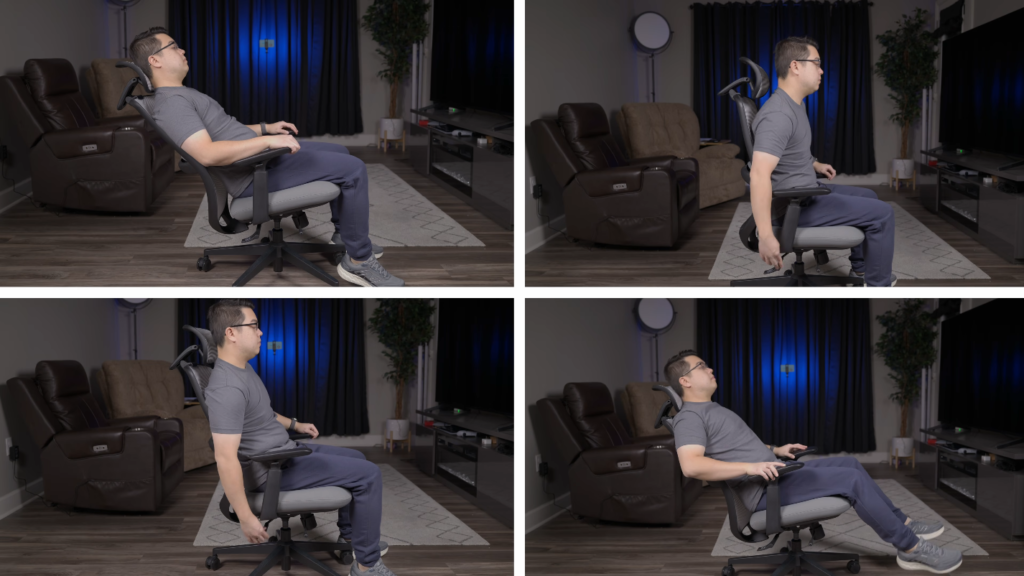
Locks at 90, 105, 120, and 130 degrees, with adjustable tilt tension.
How We Tested
We used the EC200 as a daily work chair and then tested it side by side against the newer EC200 Pro to see exactly what changes between the two.
- Sat full workdays in the foam seat to check for bottoming out and pressure points
- Tested the lumbar support through its full height and depth range
- Ran the headrest and recline through every position
- Checked the frame, base, and mechanism for creaking, rattling, and unwanted movement
Pros
- Excellent dense foam seat with no bottoming out
- Wide seat that works well for cross-legged and alternative sitting positions
- Comfortable tapered mesh backrest that stays out of your way
- Lumbar support with both height and depth adjustment
- One of the best headrests at this price
- Seat depth adjustment, still rare under $200
- Solid build quality with very little creaking or flex
Cons
- Armrests are height adjustable only
- Lumbar support is aggressive even at its lowest depth setting
- Lumbar pad can feel firm and pokey over long sessions
- Headrest adjustments are stiff to move
- Headrest clamps onto the backrest frame and presses into the mesh
- Tilt tension knob is awkward to reach while seated
| Seat | 55D high-resiliency foam |
|---|---|
| Backrest | One-piece tapered mesh |
| Frame | Plastic with a metal mechanism |
| Base | Aluminum |
| Lumbar Support | Height and depth adjustable |
| Armrests | Height adjustable |
| Headrest | 3D (two pivot points, depth adjustment) |
| Recline | Synchro-tilt, locks at 90, 105, 120, and 130 degrees |
| Tilt Tension | Adjustable knob under the seat |
| Seat Depth | Adjustable |
| Warranty | 5-year limited |
| Returns | 30 days direct from ProtoArc |
The Bottom Line
The EC200 is one of the strongest value picks in budget seating. You get a genuinely comfortable foam seat, an adjustable lumbar, a great headrest, seat depth adjustment, and build quality that holds up well for the money.
The height-only armrests are the main limitation, and the lumbar is more aggressive than some people will want. If neither of those bothers you, this is the one I’d recommend to most people over the Pro.

ProtoArc EC200 Pro
- Well-tensioned suspended mesh seat with a deep waterfall front edge
- 4D armrests with height, depth, width, and pivot adjustment
- Same height and depth adjustable lumbar as the standard EC200
- Same excellent 3D headrest and four-position recline
Suspended Mesh Seat
Enough elasticity to sink in slightly without sagging, using the same mesh as the backrest for a uniform look.
Deep Waterfall Edge
Drops away under your thighs so your legs never contact the hard plastic seat frame.
4D Armrests
Height, depth, width, and pivot adjustment with large pads that work for typing, gaming, or reclining.
Synchro-Tilt Recline
Locks at 90, 105, 120, and 130 degrees, with adjustable tilt tension.
How We Tested
We tested the EC200 Pro alongside the original EC200 so we could compare the mesh seat and 4D armrests directly against the foam seat and height-only arms.
- Checked mesh tensioning and long-session comfort in the seat
- Looked for the pressure transition where the front foam pad meets the suspended mesh
- Ran every armrest adjustment through its full range and compared pad firmness between units
- Compared backrest, lumbar, headrest, and recline against the original to confirm what carried over
Pros
- One of the better mesh seat implementations at this price
- Deep waterfall edge keeps pressure off the back of your thighs
- 4D armrests with a good range on every adjustment
- Comfortable tapered mesh backrest with height and depth lumbar
- Excellent 3D headrest carried over from the EC200
- Seat depth adjustment and four lockable recline positions
Cons
- Hard plastic seat frame makes cross-legged sitting difficult
- Arm pads on our unit felt harder than the ones on the original EC200
- Lumbar support is aggressive even at its lowest depth setting
- Headrest adjustments are stiff, and the clamp presses into the backrest mesh
- Tilt tension knob is awkward to reach while seated
- Mesh seats are polarizing, so it’s a riskier pick if you’ve never used one
| Seat | Suspended mesh with a front foam pad |
|---|---|
| Backrest | One-piece tapered mesh |
| Frame | Plastic with a metal mechanism |
| Base | Aluminum |
| Lumbar Support | Height and depth adjustable |
| Armrests | 4D (height, depth, width, pivot) |
| Headrest | 3D (two pivot points, depth adjustment) |
| Recline | Synchro-tilt, locks at 90, 105, 120, and 130 degrees |
| Tilt Tension | Adjustable knob under the seat |
| Seat Depth | Adjustable |
| Warranty | 5-year limited |
| Returns | 30 days direct from ProtoArc |
The Bottom Line
The EC200 Pro keeps everything that made the original good and swaps the foam seat for a well-executed mesh one while upgrading to 4D armrests. The tensioning is right, the waterfall edge works, and the arms are genuinely versatile.
It isn’t a straight upgrade though. The foam seat on the standard EC200 is more forgiving for alternative sitting positions. Buy the Pro if you specifically want an all-mesh chair or really value 4D arms.
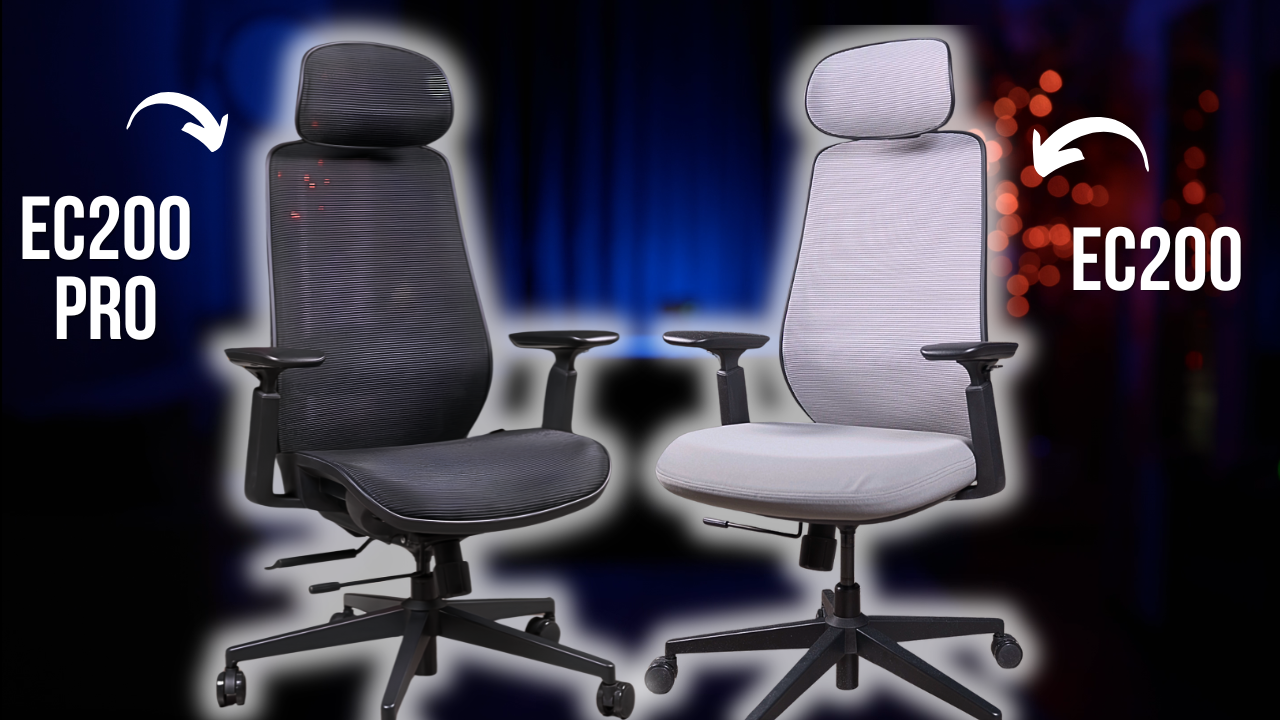
ProtoArc recently released the EC200 Pro, an upgraded version of the original EC200. I reviewed the EC200 a little while ago, and it quickly became by far my favorite office chair under $200, thanks to a really good combination of comfort, adjustability, and build quality for the price. So naturally, I was curious to see what ProtoArc would change with the new Pro model.
The original EC200 currently sells for around $179, while the EC200 Pro comes in at around $229. That raises the obvious question: is the Pro worth the extra $50, or are you better off sticking with the original? Below I will break down everything that changed between the two chairs to help you decide which is the better fit for you.
EC200 vs EC200 Pro at a Glance
My Favorite Budget Office Chair Under $200
ProtoArc
ProtoArc EC200
- Dense 55D foam seat that stays comfortable through full workdays
- Lumbar support with height and depth adjustment, plus one of the best headrests at this price
- Seat depth adjustment and a four-position recline, both uncommon on budget chairs
Current Promotion
Save 10% at ProtoArc with this code.
DANHOANGSLEEKSEThe Best All-Mesh Office Chair I’ve Tested Around $230
ProtoArc
ProtoArc EC200 Pro
- Well-tensioned suspended mesh seat with a deep waterfall front edge
- 4D armrests with height, depth, width, and pivot adjustment
- Same adjustable lumbar, 3D headrest, and four-position recline as the standard EC200
Current Promotion
Save 10% at ProtoArc with this code.
DANHOANGSLEEKSE| ProtoArc EC200 | ProtoArc EC200 Pro | |
|---|---|---|
| Price | ~$179 | ~$229 |
| Seat | 55D high-resiliency foam | Suspended mesh with waterfall edge |
| Armrests | Height adjustable only | 4D (height, depth, width, pivot) |
| Backrest | Tapered one-piece mesh | Tapered one-piece mesh (identical) |
| Lumbar | Height and depth adjustable | Height and depth adjustable (identical) |
| Headrest | 3D with dual pivot and depth | 3D with dual pivot and depth (identical) |
| Recline | Synchro-tilt, 4 positions | Synchro-tilt, 4 positions (identical) |
| Seat depth adjustment | Yes | Yes |
| Base and frame | Plastic with aluminum base | Plastic with aluminum base (identical) |
| Warranty | 5-year limited | 5-year limited |
| Best for | Most people, mixed sitting positions | Shoppers who specifically want mesh |
The short version: the two chairs share the same backrest, lumbar, headrest, recline, base, and build quality. The only real differences are the seat and the armrests. Everything below digs into what that means in practice.
ProtoArc EC 200 vs EC200 Pro Review Video
Design and Build Quality
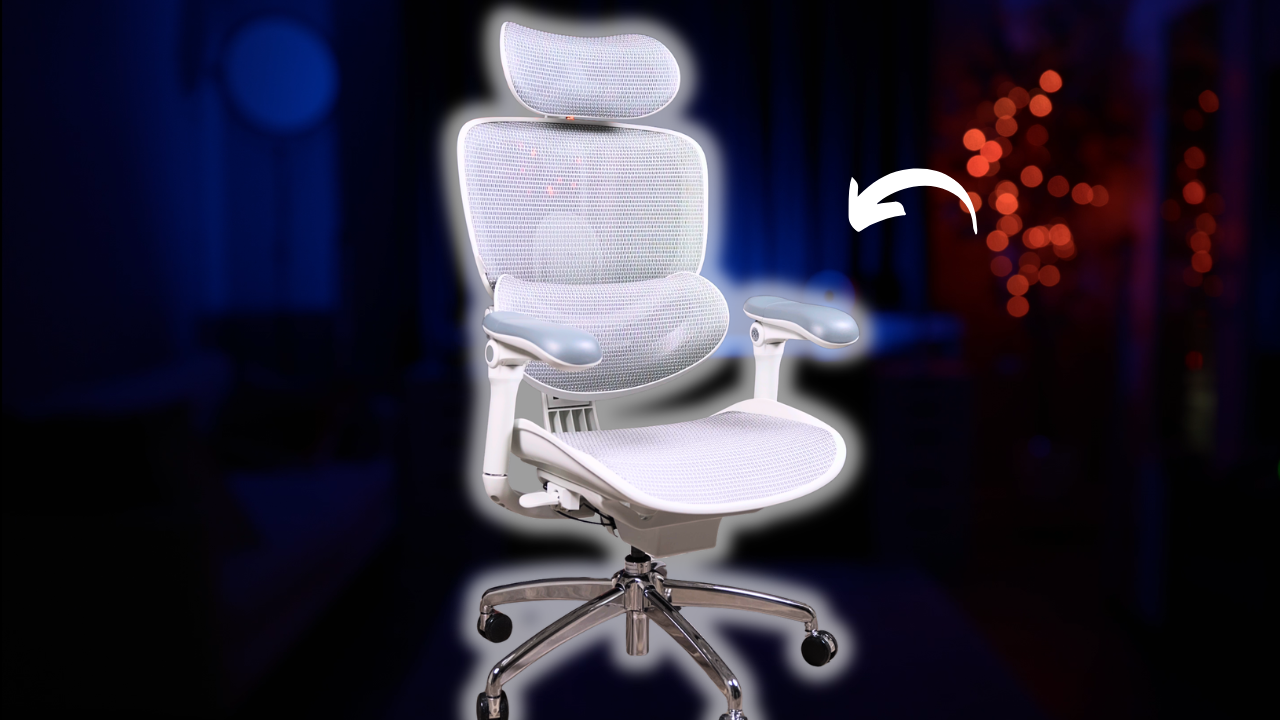
These chairs are extremely similar. The EC200 Pro is essentially built on the same foundation as the original EC200. Both share the same clean, modern ergonomic design, along with the same tapered mesh backrest, adjustable lumbar support, headrest, base, and overall frame. The two major changes are the seat and armrests: the EC200 has a padded foam seat and height-adjustable arms, while the Pro switches to a mesh seat and upgrades to 4D arms.
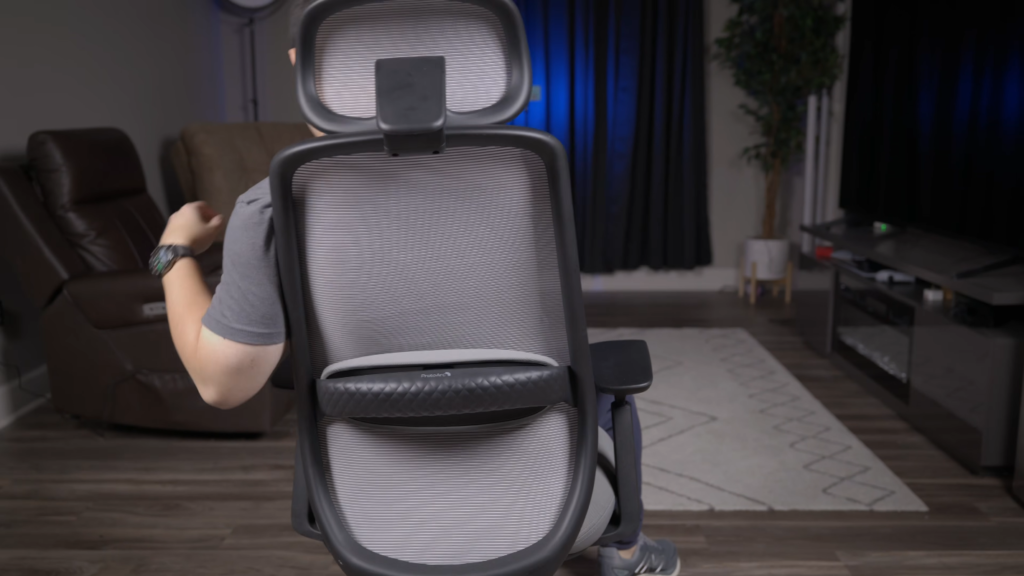
Build quality is very similar too. Both chairs are primarily plastic with a metal mechanism and aluminum base, and despite all that plastic, both feel surprisingly solid. I have not noticed much creaking or rattling, and there is very little unwanted movement in either chair. You are obviously not getting the materials or refinement of a $500 or $1,000 ergonomic chair, but compared to other budget chairs I have tested, the construction is very good.
Both also use the same mesh material, which has a decent amount of elasticity that lets you sink in slightly without feeling loose or unsupported. It is not anything particularly premium, but it is comfortable and avoids the rough, scratchy feeling you sometimes get from cheaper mesh. Overall, build quality continues to be one of the stronger aspects of both chairs, especially at this price point.
What’s Identical Between the Two Chairs
Before getting to the differences, it is worth spelling out how much these two chairs share. If a feature is not the seat or the armrests, it is essentially the same on both.
Backrest and Lumbar Support
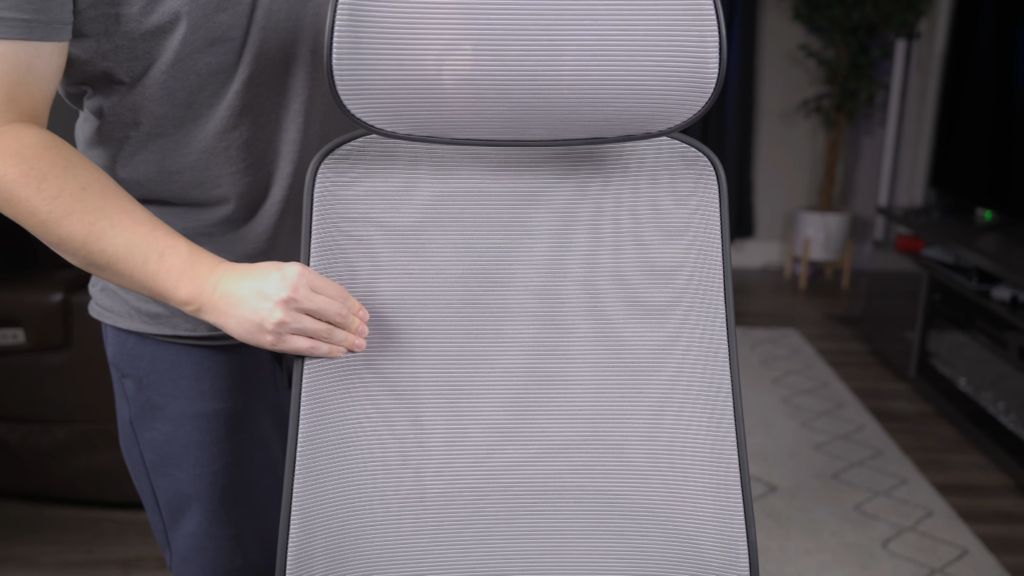
The backrest is identical between the EC200 and EC200 Pro. It is a one-piece mesh design with a slim profile that tapers toward the top. I really like this shape because it stays out of the way when I am moving my arms, stretching, or shifting positions, while still providing plenty of support. The mesh is breathable and the tension is well judged. It is not so loose that you sink through and feel the plastic frame, but not so taut that it feels overly firm. It strikes a nice balance and is supportive overall.
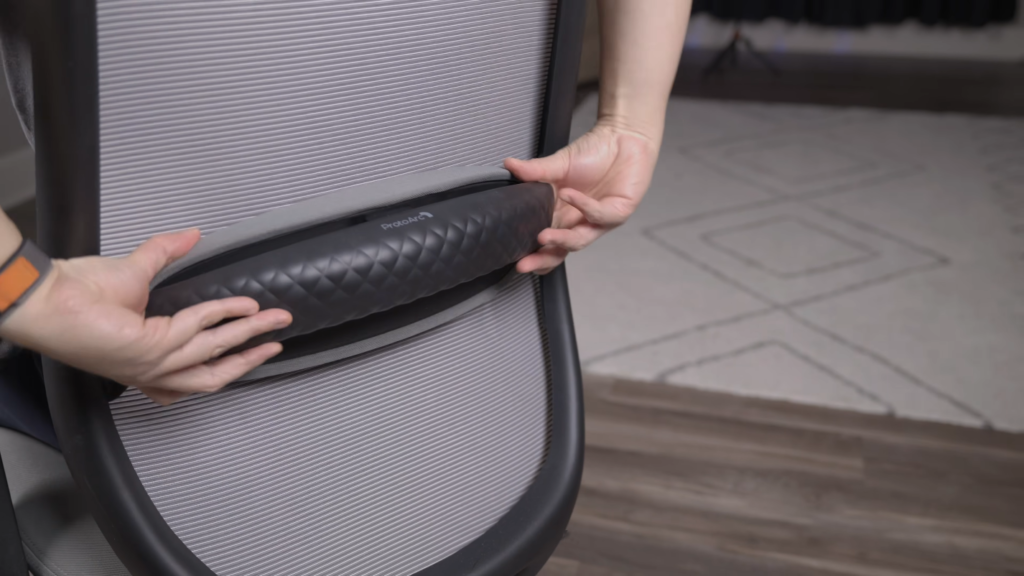
You also get the same adjustable lumbar support on both chairs, with height and depth adjustment that is impressive for this price range. You can position it where it naturally fits your lower back and control how far forward it pushes. That said, this remains one of my criticisms of both chairs. Even at the lowest depth setting, I find the lumbar fairly aggressive. If you like a lot of lower-back support that may be a positive, but I would have preferred the lowest setting to be a little more subtle, and the pad can feel somewhat firm and pokey during longer sessions. I love the amount of adjustment, but the actual feel of the lumbar is not going to be for everyone.
Recline
Both chairs use the same synchro-tilt mechanism with four lockable positions at 90, 105, 120, and 130 degrees. The motion is smooth, and there is enough range to go from focused work to a fairly relaxed sitting position. You can adjust the tilt tension, though the knob sits underneath the seat and is somewhat awkward to reach while seated. It is nothing fancy, but it works well and gives you everything I would expect from a good budget ergonomic chair.
Headrest
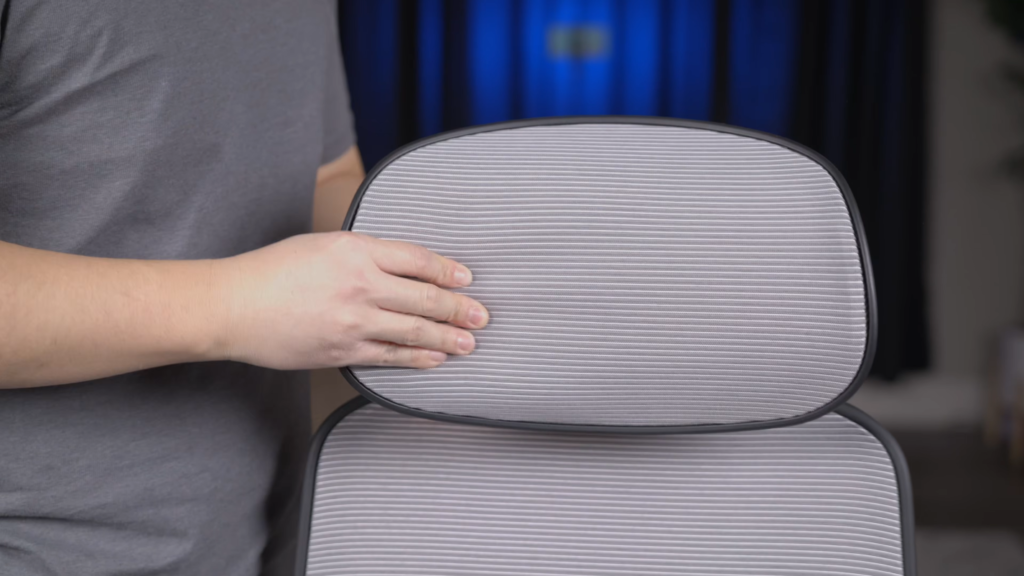
The headrest is also identical between both chairs, and it is one of the best I have tested at this price. It is a 3D design with two separate pivot points and independent depth adjustment, which together give you a ton of flexibility. I can position it behind my neck while sitting upright or rotate it back to support my head while reclining. There is no dedicated height adjustment, but combining the two pivot points with the depth adjustment effectively changes where it makes contact. It uses the same comfortable mesh as the backrest and is wide enough that I do not feel the hard plastic frame on either side.
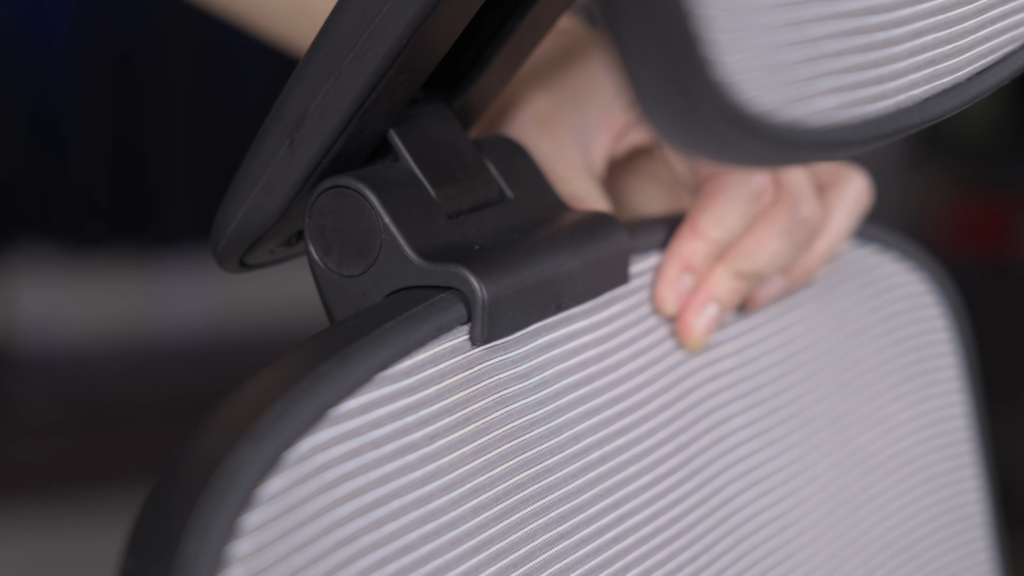
My biggest complaint is that some of the adjustments are extremely stiff. They hold position well, but moving them can take more force than I would like. The depth adjustment also uses a ratcheting system, so you have to extend it fully before it resets backward. I am also not a fan of the mounting system, where the headrest clamps directly onto the backrest frame and you can see the clamp pressing against the mesh from the front. I have not had any problems with it, but I would prefer a cleaner design for long-term durability. Still, these are relatively minor complaints, and for the price the comfort and range of adjustment are excellent.
The First Big Difference: Foam vs Mesh Seat
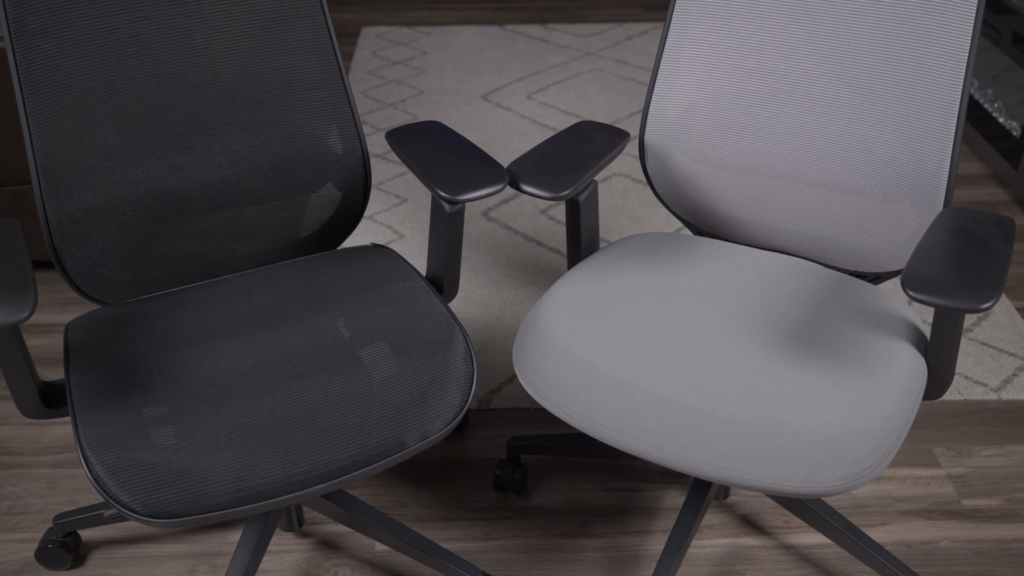
The seat is where these chairs really start to separate.
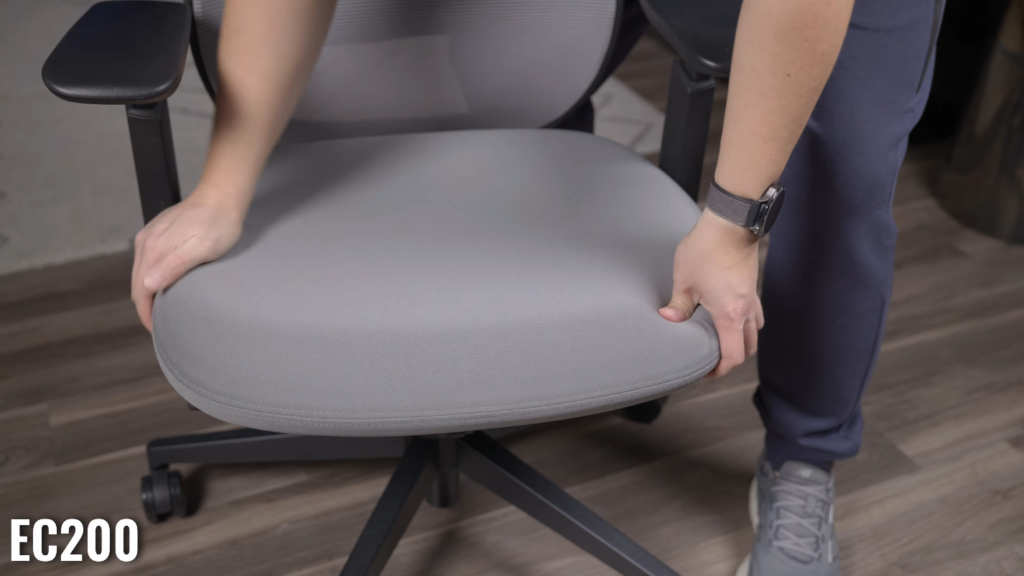
The original EC200 uses a 55D high-resiliency foam cushion, and this is still one of my favorite seats I have tested on a budget chair. It is definitely firm, but there is enough give that it never feels stiff or uncomfortable. The foam is dense and supportive, and I have spent plenty of long workdays in it without any bottoming out. The seat is also nice and wide, with plenty of room to shift positions, tuck a leg underneath you, or sit cross-legged.
The EC200 Pro replaces that cushion with a suspended mesh seat, and after spending time with it, I think ProtoArc did a really good job here, especially for the price. One of the most important things with a mesh seat is tension. Stretch it too tightly and it feels extremely firm. The Pro strikes a nice balance, with enough elasticity that you sink in slightly for that comfortable suspended feeling, without feeling loose or saggy. It uses the same mesh as the backrest, so the whole chair has a uniform look. The mesh quality is not going to wow you, but it is perfectly good for the price, and the seat is wide and spacious when sitting normally.
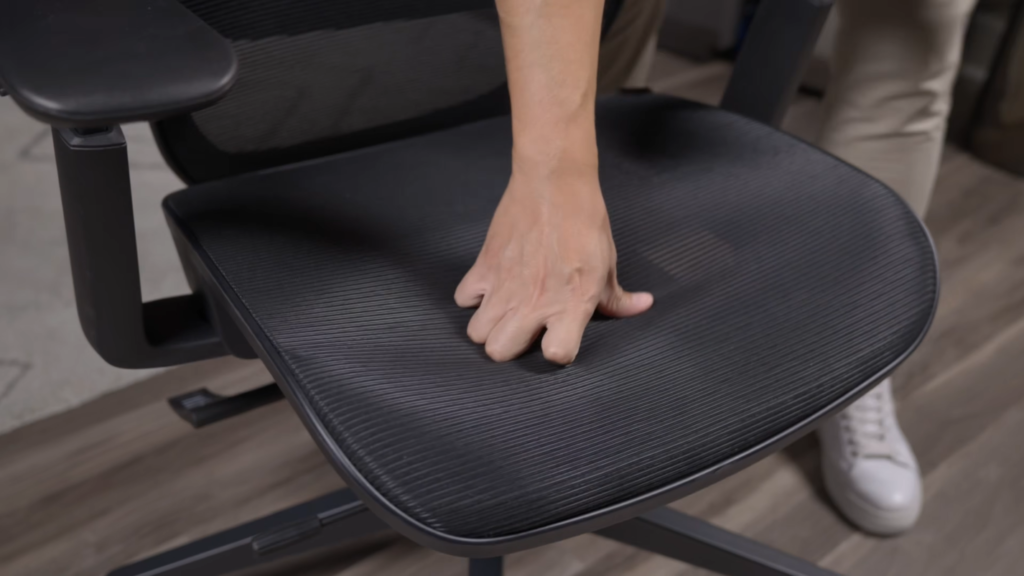
Where the EC200 keeps an advantage is freedom of movement. Like most mesh chairs, the Pro has a hard plastic frame surrounding the seat, which makes it less ideal for sitting cross-legged or putting your legs up. If you are constantly changing positions throughout the day, the padded EC200 is more forgiving.
There is also a foam pad underneath the mesh at the front of the Pro’s seat. Normally I am not the biggest fan of this design, since you can sometimes feel the transition between the suspended mesh and the padded section. But surprisingly, I barely notice it here. The Pro has a really deep waterfall edge that drops away underneath your thighs and keeps your legs off the hard plastic frame. It works well and keeps the seat comfortable even during longer sessions. Overall, this is probably the best all-mesh chair I have tested around this price point.
Both chairs also include seat-depth adjustment, letting you slide the seat forward or backward to match your leg length. That is an important ergonomic feature and still surprisingly uncommon on chairs under $200.
That said, I would not automatically call the mesh seat better than the foam seat. They offer two very different sitting experiences, and which one you prefer is highly subjective. In general, a traditional foam padded seat is the safer pick for most people. Mesh seats can be polarizing, with some people loving them and others hating them. So if you are unsure whether you like a mesh seat, I would go with the regular EC200’s padded seat to be safe.
The Second Big Difference: Armrests
The armrests are the other major difference between these two chairs.
The original EC200 only has height adjustment, which was one of my biggest criticisms when I first reviewed it. The pads themselves are very good, though. They are large, relatively soft, and comfortable to rest your elbows on. You get a good height range, and they drop low enough to tuck the chair under most desks.
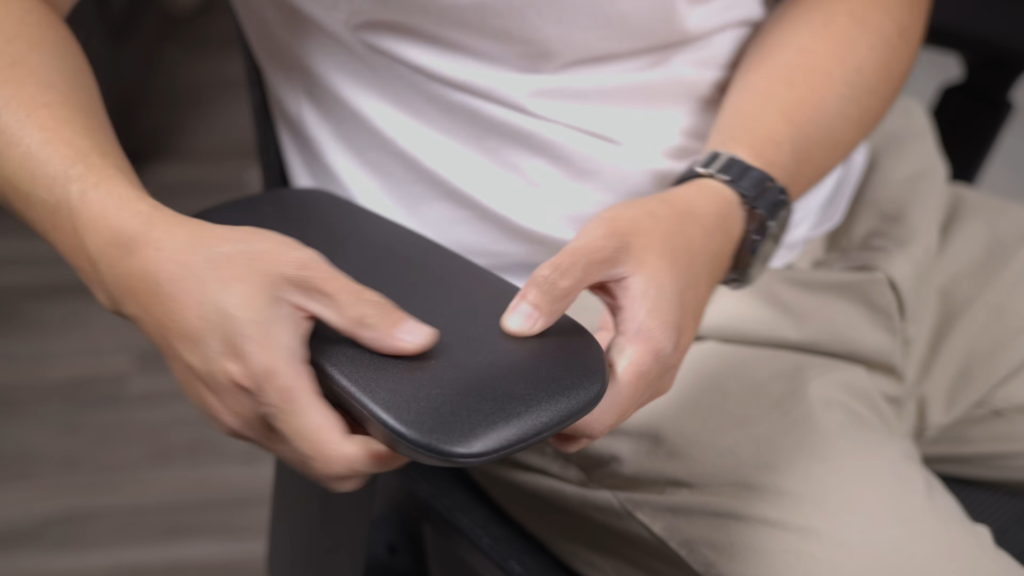
The EC200 Pro addresses the lack of adjustment by upgrading to 4D armrests. You can adjust height, depth, width, and pivot, with a decent range of motion for each. For a chair around $200, these are really good armrests. They keep the same large arm-pad shape, so between the larger surface area and all the extra adjustments, it is easy to find a usable position whether I am typing, gaming, or reclining.
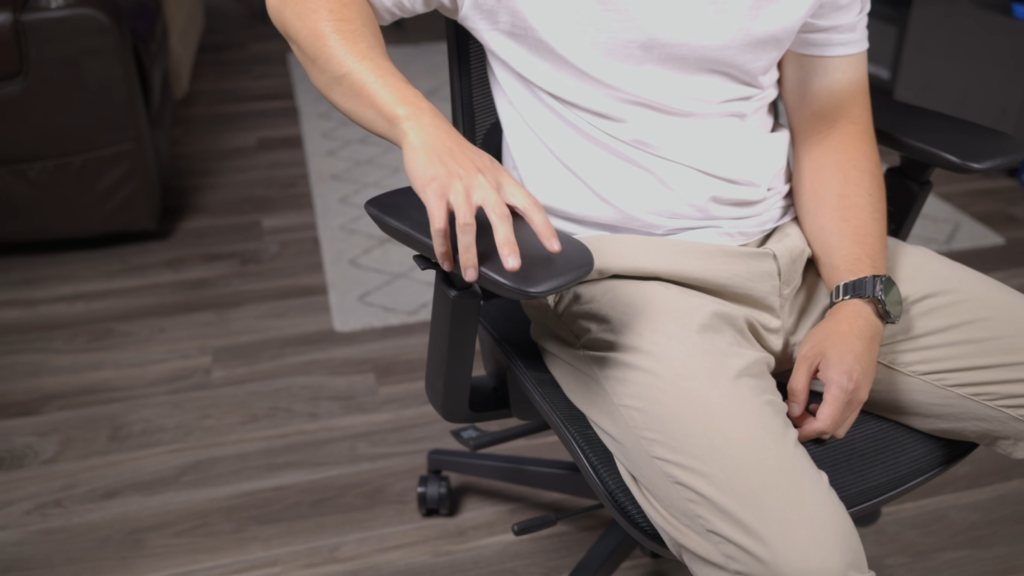
There is one strange difference I noticed. Even though the pads look identical, the ones on my EC200 Pro feel noticeably harder than the pads on the original EC200. The original pads have more give and are more comfortable when I am digging my elbows in. I am not sure whether ProtoArc actually changed the material or if this is just unit-to-unit variation, so I would not necessarily expect every EC200 Pro to have harder pads. But between my two units, the original EC200 has the more comfortable pads, while the Pro easily wins on adjustability.
Value: Which One Should You Buy?
My Favorite Budget Office Chair Under $200
ProtoArc
ProtoArc EC200
- Dense 55D foam seat that stays comfortable through full workdays
- Lumbar support with height and depth adjustment, plus one of the best headrests at this price
- Seat depth adjustment and a four-position recline, both uncommon on budget chairs
Current Promotion
Save 10% at ProtoArc with this code.
DANHOANGSLEEKSEThe Best All-Mesh Office Chair I’ve Tested Around $230
ProtoArc
ProtoArc EC200 Pro
- Well-tensioned suspended mesh seat with a deep waterfall front edge
- 4D armrests with height, depth, width, and pivot adjustment
- Same adjustable lumbar, 3D headrest, and four-position recline as the standard EC200
Current Promotion
Save 10% at ProtoArc with this code.
DANHOANGSLEEKSEThe original EC200 currently costs $179.99, while the EC200 Pro is $229.99. That is a $50 difference, or roughly a 28 percent increase in price. When you break down what actually changes, you are essentially paying that extra $50 for two things: the mesh seat and the 4D armrests.
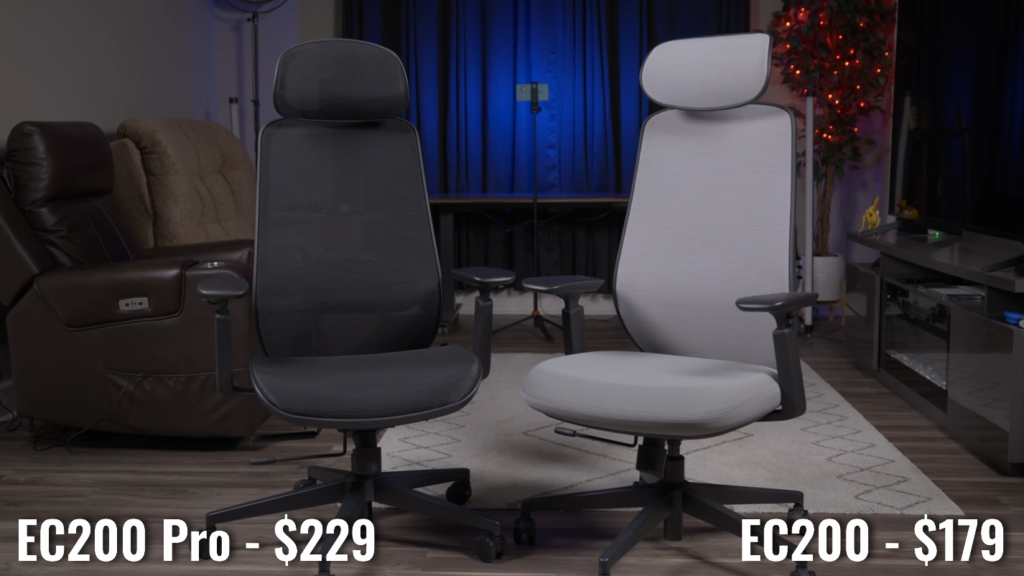
The armrests are a straightforward upgrade. Height, depth, width, and pivot adjustment give you significantly more flexibility than the height-only arms on the EC200. The seat is more complicated. I think ProtoArc did an excellent job with the mesh seat, with good tensioning, a comfortable amount of elasticity, a spacious feel, and a deep waterfall edge that prevents a lot of the pressure issues cheaper mesh chairs run into. But mesh is not inherently better than foam. The original EC200 already has a really good padded seat, and I actually think it is the safer choice for most people. It is more forgiving, better for alternative sitting positions, and you do not have to worry about whether you are someone who likes the feel of a suspended mesh seat.
So you are not really paying $50 for a better seat. You are paying for a different type of seat along with significantly better armrests. Because of that, I still think the original EC200 is the better value for most people. At $180, you get the same backrest, lumbar support, headrest, seat-depth adjustment, recline mechanism, and essentially the same build quality. Unless you specifically want mesh or really value 4D armrests, I would probably save the $50.
But if you are specifically shopping for an all-mesh chair, that is where the EC200 Pro makes a lot more sense. At around $230, this is probably the best all-mesh office chair I have personally tested in this price range. The seat is genuinely comfortable, the 4D arms are very versatile, and you still get all the features that made the original EC200 such a strong chair.
Both chairs come with ProtoArc’s 5-year limited warranty and a 30-day return window when purchasing directly through ProtoArc.
The Bottom Line
My Favorite Budget Office Chair Under $200
ProtoArc
ProtoArc EC200
- Dense 55D foam seat that stays comfortable through full workdays
- Lumbar support with height and depth adjustment, plus one of the best headrests at this price
- Seat depth adjustment and a four-position recline, both uncommon on budget chairs
Current Promotion
Save 10% at ProtoArc with this code.
DANHOANGSLEEKSEThe Best All-Mesh Office Chair I’ve Tested Around $230
ProtoArc
ProtoArc EC200 Pro
- Well-tensioned suspended mesh seat with a deep waterfall front edge
- 4D armrests with height, depth, width, and pivot adjustment
- Same adjustable lumbar, 3D headrest, and four-position recline as the standard EC200
Current Promotion
Save 10% at ProtoArc with this code.
DANHOANGSLEEKSEProtoArc did a really good job with the EC200 Pro. They took what was already my favorite office chair under $200 and created a very good all-mesh alternative without changing most of the things I liked about the original.
For most people, I would still recommend the EC200. At $179.99, it is extremely difficult to beat from a value standpoint, and the padded seat is going to be the safer option for the average person. But if you specifically want an all-mesh chair, I would have no problem spending the extra $50 on the EC200 Pro. The mesh seat is one of the better implementations I have tested at this price, and the 4D armrests give you significantly more flexibility.
I would not think of the EC200 Pro as a replacement for the original EC200. They are really two versions of the same chair aimed at slightly different buyers.
EC200 vs EC200 Pro FAQs
What is actually different between the EC200 and EC200 Pro?
Only two things: the seat and the armrests. The EC200 has a foam padded seat and height-only arms, while the Pro has a suspended mesh seat and 4D arms. The backrest, lumbar, headrest, recline, base, and build quality are all the same.
Is the mesh seat on the Pro better than the foam seat on the original?
Not necessarily. They are two very different sitting experiences, and preference is highly subjective. The mesh seat is one of the best I have tested at this price, but the foam seat is more forgiving and better for cross-legged or alternative sitting positions, which makes it the safer pick for most people.
Are the 4D armrests worth it?
If armrest flexibility matters to you, yes. Going from height-only to height, depth, width, and pivot is a real upgrade. Just note that on my units, the Pro’s arm pads felt a bit harder than the original’s, though that may be unit-to-unit variation.
Which one is the better value?
For most people, the original EC200 at around $179 is the better value, since you get almost everything the Pro offers for $50 less. The Pro makes more sense if you specifically want an all-mesh chair or really want 4D armrests.
Do both chairs have the same warranty?
Yes. Both come with ProtoArc’s 5-year limited warranty and a 30-day return window when purchased directly through ProtoArc.
Which should I buy if I like to sit cross-legged?
Go with the original EC200. Its padded foam seat handles alternative sitting positions much better than the Pro’s mesh seat, which has a hard plastic frame around the edge.